Welcome

We are a voluntary-aided (VA) church school near Potters Bar. Originally founded in 1851 and extended gradually since then, we serve the village of Northaw in Hertfordshire. We now have 4 classes and just over 100 pupils.
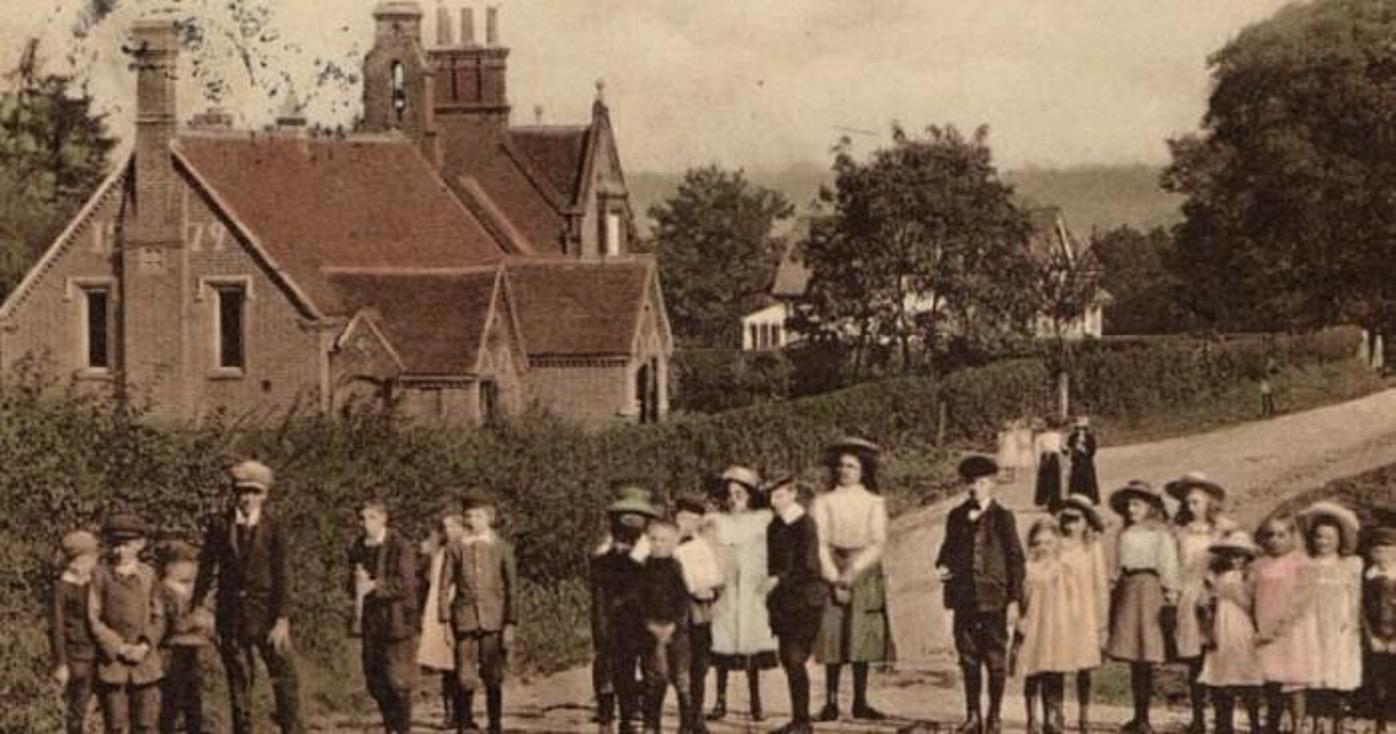
Northaw School stands at the heart of the village with a story that stretches back more than two centuries. The present building was first completed in 1830, extended in 1879 and modernised in the 1970s to provide space for about seventy children across three classes. Yet the roots of education in Northaw reach further still, shaped by charity, community spirit and the determination to provide learning for local children.
Early records held in the Hertfordshire archives describe the establishment of a free school supported by King James’ benefaction. The schoolmaster received £20 a year to teach eight poor children in reading, writing and arithmetic. He also taught fee‑paying pupils whose parents contributed small weekly or quarterly sums. The charity paid him for teaching the poorest children and granted £5 a year for use of the schoolroom, while reserving the right to “express satisfaction or otherwise with the good conduct of the master.” The master and his wife were also responsible for escorting the children to church on Sundays for an additional £5 each.
By the early nineteenth century the school operated from premises in Church Lane, now four cottages. The 1838 Land Valuation Map shows the schoolroom, land and house occupied by the schoolmaster J H Binyon. Charity accounts from the 1820s and 1830s record payments for books, slates, pens, ink and fuel. Four of the foundation boys were taught to write on paper while the others practised on slates. In 1838 the schoolmaster reported that “all the desks and forms are completely worn out,” prompting the trustees to order new furniture and replace the broken glass on the school clock.
A turning point came in the 1840s when the Lord of the Manor at Nyn offered £50 and land for a new school. The trustees contributed £100 and Rev Trenchard offered freehold ground for the site. A management committee was formed and subscriptions totalling £350 were raised. Although early tenders exceeded the available funds the architect was instructed to revise the plans so the building could be completed for no more than £600. The new school, designed for 80 boys and girls and 40 infants with a house for the master and matron, was finished in 1851. The date 1850 still appears on the eastern gable.
With the new building complete J H Binyon closed his free school in Church Lane, noting that “to occupy two charity schools and the masters in a village with a population of 545 must be considered by all to be an absurdity.” He agreed not to open another school in the parish in return for £50. The trustees continued to meet in the schoolroom and provided £60 a year for staff and upkeep. In 1879 they granted £250 for an extension, the date of which remains visible on the west side of the building. A school bell purchased in 1880 was removed during the 1970s rebuilding and now hangs at the rear of the school.
Late nineteenth‑century log books paint a vivid picture of school life. The school closed at times due to measles, heavy snow or village events. Benefactors donated swings, a see‑saw and a piano “in order that drill may be more creditably performed.” Children visited the Crystal Palace for Queen Victoria’s Diamond Jubilee and took part in tug‑of‑war competitions and cricket matches against neighbouring schools. By 1899 the roll had reached 100, prompting the wry comment “where did they put them all.” Inspectors noted that “the children have a bad habit of indulging in superfluous talk,” while the master recorded absences due to boys working as beaters for shooting parties and girls gathering acorns to sell.
The early twentieth century brought further developments. In 1906 the school’s name was changed to Northaw Church of England School. In 1909 the schoolroom was licensed for music and dancing which required outward‑opening doors. The First World War is mentioned only briefly although children collected souvenirs from the Zeppelin destroyed at Cuffley and absences were recorded during air raids.
The interwar years saw continued sporting fixtures, community events and improvements such as the connection to Barnet Water in 1927 and the replacement of the horse‑drawn school bus with a motor vehicle in 1929. A lightning strike in 1930 caused structural damage to the school house.
During the Second World War trenches were dug for protection and evacuees were received. The Hut, on the site of the present village hall, was used for school activities. The school closed during a poliomyelitis outbreak in 1941 and children were given time off to help with the potato harvest. Several flying bombs and a rocket fell close to the school in 1944 causing repeated damage to roofs, windows and the school house.
The post‑war years brought steady improvement. New heating stoves were installed in 1951, a canteen was built in 1952 and electricity replaced gas lighting in 1953. Additional playing fields were leased in 1956 and a new classroom was added in 1958. The 1960s and 1970s saw further expansion culminating in a major extension completed in 1975. This provided modern facilities for up to seventy pupils with funding from the Department of Education, Hertfordshire County Council, the Diocese of St Albans and the local governing body.
The school’s leadership history, recorded from 1883 onwards, includes headteachers such as Mr Ashton, Mr Dale, Mr Isaac, Mr Siggens, Mr Tucker and Mr Steventon who served from 1923 until 1951. Their work, along with that of many unnamed staff and volunteers, helped shape the school that continues to serve the village today.
Northaw School’s history is one of generosity, resilience and community commitment. From its earliest days as a charity school to its present role as a thriving Church of England primary, it has remained a place where children learn, grow and take their place in the long story of the village.